November 2025: Launching our second (DFC) course on Decarbonization, energy efficiency, and new green solutions in the maritime sector
In the Maritime Research Alliance we work to facilitate cross-institutional and interdisciplinary collaboration that supports the green transition of the maritime sector. This autumn, we were proud to launch our second Danida Fellowship Centre (DFC) course on Decarbonization, energy efficiency, and new green solutions in the maritime sector.
The course was developed in close collaboration with Danida Fellowship Centre and Danish Maritime Authority with the aim of sharing knowledge across continents on how to decarbonize shipping. Over three intensive weeks, 26 participants from Ghana, Kenya, China, India, Indonesia, and Ukraine engaged with experts from more than 30 organizations across Blue Denmark.
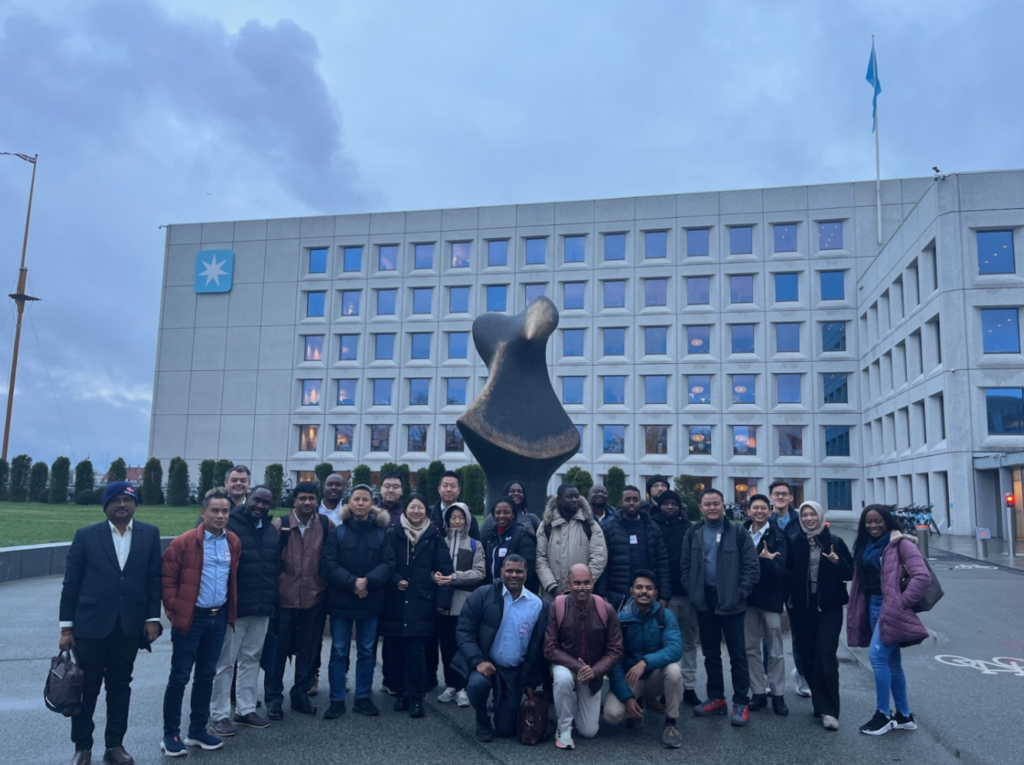
The program combined academic insights, industry perspectives, regulatory discussions, and hands-on site visits. Participants explored shipping companies’ GHG strategies, onboard energy efficiency measures, commercial drivers of fuel consumption, engine development, alternative fuels, electrification, P2X production, port decarbonization, digital solutions, and the role of maritime authorities in enabling the transition.
Throughout the course, we visited and collaborated with leading institutions and companies across Denmark, including Copenhagen Business School, Danmarks Tekniske Universitet, Syddansk Universitet, A.P. Moller – Maersk, Mærsk Mc-Kinney Møller Center for Zero Carbon Shipping, Aarhus Havn, Marstal Navigationsskole, and Hempel A/S among many others.
The diversity of perspectives—from ports, regulators, shipyards, educational institutions, and shipping companies—highlighted that decarbonization pathways differ across national and sectoral contexts. At the same time, the course demonstrated the value of collaboration, knowledge-sharing, and ecosystem thinking in accelerating maritime decarbonization.
On the final day, participants presented concrete action plans to implement in their home countries. These included policy recommendations, development of green corridors, electrification initiatives, just-in-time arrival systems, energy efficiency measures, new training programs, and strengthened maritime research and innovation networks.
Capacity building and international knowledge exchange are essential if we are to meet global climate ambitions in shipping. We are proud to have contributed to strengthening partnerships between Denmark and key maritime nations, and to have facilitated dialogue between academia, industry, and authorities.
A sincere thank you to all participants and to the many organizations across Blue Denmark that contributed with expertise, time, and engagement. It has been a privilege to be part of such an ambitious and collaborative effort toward a more sustainable maritime future.