Find maritime knowledge
Knowledge
Keyword: seafarers
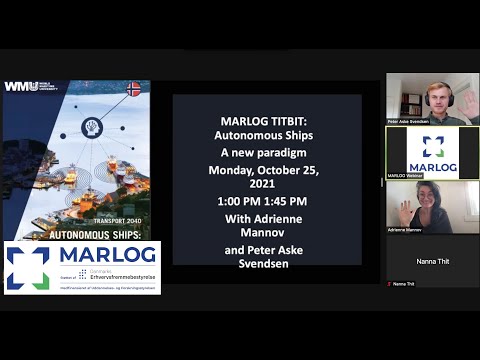
Autonomous Ships: A new paradigm for Norwegian shipping
In this webinar, Adrienne Mannov from Aarhus University and Peter Aske Svendsen from NFA presented their research on autonomous shipping as this relates to seafaring and technology, based on their 2019 report, “Transport 2040: Autonomous ships: A new paradigm for Norwegian shipping - Technology and transformation”.
The event was organized in collaboration with MARLOG
Does seafarers’ limited access to health care increase risk for community-acquired pneumonia requiring hospital care? A longitudinal register-based analysis
Background: Limited access to medical care can be considered as an occupational risk of seafaring and it may predispose to developing community-acquired pneumonia (CAP) requiring hospital care. We sought to investigate the risk for CAP and other lower respiratory tract infections (LRTI) requiring hospital care among seafarers. We examined the length of hospital stay (LOS) as a proxy for severity of illness. Methods: The study population in this panel data analysis were all seafarers and a 20% random sample of economically active individuals aged 18–65 years who were residing in Denmark in 1997–2016, constituting more than 11 million person-years of follow-up. Annually-registered socio-demographic and work characteristics were linked to data on cause of hospital admissions. We used fixed-effects and zero-truncated Poisson regression to estimate the rate ratios of hospitalization for CAP and other LRTI, and compared LOS across the two populations. Results: The adjusted incident rate ratio (IRR) for CAP in seafarers compared to the economically active population was 1.42 (95% confidence interval [CI]: 1.15–1.77), whereas the IRR was 0.73 (95% CI: 0.38–1.42) for other LRTI. For LOS, the IRRs for CAP and other LRTI in seafarers were 1.08 (95% CI: 1.04–1.12) and 0.92 (95% CI: 0.83–1.01), respectively. Conclusions: Our findings indicate that seafaring was associated with an increased risk for CAP requiring hospital care. Limited access to health care may be an important contributing factor.
The impact of the Maritime Labor Convention on seafarers’ working and living conditions: an analysis of port state control statistics
Background
The Maritime Labour Convention, 2006 (MLC2006) entered into force in August 2013 and is a milestone for better working and living conditions (WLC) for seafarers. As of March 2020, 96 countries have ratified the MLC2006, covering more than 90% of the world’s shipping fleet. A system of port state control (PSC) allows ratifying countries to inspect any foreign ship arriving in their ports for compliance with the convention. It is intended as a second safety measure for the identification of substandard ships that sail all over the world. Nine regional agreements, so-called Memoranda of Understanding (MoU), have been signed to coordinate and standardize PSC inspections and to increase efficiency by sharing inspections and information. This paper uses public PSC statistics to evaluate the impact of the MLC2006.
Methods
A preliminary analysis using registered tonnage and MLC2006 ratification was conducted and seven MoU were selected for the analysis. The annual reports of these MoU have been viewed in September 2019. Numbers on annual inspections, deficiencies and detentions and in particular data for deficiencies related to living and working conditions and certificates and documents, have been extracted and analyzed for the years 2010 to 2017.
Results
Across the eight-year period analyzed, inspection numbers remained stable among all MoU authorities. Deficiencies overall and deficiencies related to WLC declined, indicating an improvement in conditions overall and an increased focus on seafarers’ conditions on board. After the MLC2006 entered into force, three MoU reported WLC-ratios above 14%, while the numbers didn’t rise above 10% in the other four authorities. Deficiencies related to certificates and documents did not rise significantly between 2010 and 2017. Two European MoU showed the highest ratios for deficiencies in both categories analyzed.
Conclusion
The analysis confirmed that an increasing attention is being paid to the inspection of working and living conditions, especially in European countries. However, a clear positive impact of the MLC2006 could not be determined from the PSC statistics in this analysis. A large variation still exists among the MoU, a fact that demands increased efforts for harmonization of PSC procedures.
Injuries and Fatalities in Danish Commercial Fishing Fleet in 1998–2016
Background: Fishing is a risky occupation as injuries and fatalities in fishing vessels are quite common. This paper investigates the pattern of injuries aboard fishing vessels in Denmark to get a better understanding of areas where further action is needed to reduce the number of injuries and fatalities in Danish fishing vessels. Materials and methods: Data for this study, extracted from the Danish Fishermen’s Occupational Health Service’s database (in the period 1998–2012) and the Danish Maritime Authority’s accident report from 2013 to 2016, include 1840 injuries in Danish fisheries. Result: The results showed decreased injuries in the study period from 45 injuries and deaths per 1000 fishermen reported to the authorities to 12 injuries and deaths per 1000 fishermen in 2016: 2.1% (n = 39) of all reported injuries in the study period resulted in the death of a fisherman and the remaining injuries resulted in sick leave of more than one day; 52.5% (n = 600) of reported injuries involved fishermen who have less than one year’s experience of employment; 29% (n = 407) of injuries took place between 12:00 and 16:00, and the second largest number of injuries, 23.3% (n = 324), took place between 8:00 and 12:00. The incident rate of slip/fall injuries has decreased from 10.06 per 1000 fishermen in 1998 to 3.84 in 2016. The incidence rate of injuries caused by crushing also decreased, from 9.32 accidents per 1000 fishermen in 1998 to 2.56 in 2016. Most of the injuries, 74.5% (n = 1307), happened on the deck of the vessel. Sprain/strain was among the most common injuries (34.2%; n = 538) followed by fracture (24.8%; n = 391). Conclusion: This study indicated that the number of injuries had been gradually decreasing in Danish commercial fishing vessels in the period from 1998 to 2016. The rate of injuries had been declining due to several initiatives such as the establishment of The Danish Fishermen’s Occupational Health Services, training, safety campaigns, technological improvement and structural changes in fisheries management. However, there are still places for improvement.
Do Danish Maritime Doctors Value Continuous Education Initiatives?
Aims and objectives: Seagoing employees must undergo medical examinations every second year. Even though International Organisations issued guidelines for these pre-employment medical examinations there is a lack of an internationally accepted continuous training programme for the maritime doctors who perform these examinations. The aim of this survey was to examine the Danish maritime doctors perceived training needs as part of a planned comprehensive maritime occupational health prevention programme.
Methods: A questionnaire based on international standards was distributed to all the maritime doctors (110) electronically in May 2017. The completed questionnaires were 46.4%. STATA was used for the statistical analysis of the data and correlations among the self-rated needs as dependent variables and the doctors characteristics were performed with Fisher exact test, with significance level at α=0.05%.
Results: The maritime doctors considered very important to receive training in “Fitness evaluation and medical examinations guidelines” (76.47%) followed by “Rules and regulations within maritime medicine” (68.63%) and “Working conditions and health risks on board” (62.75%). The number of examinations influenced their preference with those with more than 20 patients to express a more pressing need for training. Age, gender and years of practice did not have any influence in their self-rated needs. Furthermore, they pointed out flexible ways of training including distance learning and
the establishment of a webpage by the respective Authorities as one stop-shop.
Conclusion: Maritime doctors are in favour of continuous education and training. The survey may help the respective Authorities to organise such short courses on targeted topics in the country.
The costs of repatriating an ill seafarer: a micro-costing approach
Seafarers sail the high seas around the globe. In case of illness, they are protected by international regulations stating that the employers must pay all expenses in relation to repatriation, but very little is known about the cost of these repatriations. The objective of this study was to estimate the financial burden of repatriations in case of illness. We applied a local approach, a micro-costing method, with an employer perspective using four case vignettes: I) Acute myocardial infarction (AMI), II) Malignant hypertension, III) Appendicitis and IV) Malaria. Direct cost data were derived from the Danish Maritime Authority while for indirect costs estimations were applied using the friction cost approach. The average total costs of repatriation varied for the four case vignettes; AMI (98,823 EUR), Malignant hypertension (47,597 EUR), Appendicitis (58,639 EUR) and Malaria (23,792 EUR) mainly due to large variations in the average direct costs which ranged between 9560 euro in the malaria case and 77,255 in the AMI case. Repatriating an ill seafarer is a costly operation and employers have a financial interest in promoting the health of seafarers by introducing or further strengthen cost-effective prevention programs and hereby reducing the number of repatriations.
The metabolic syndrome among Danish seafarers: a follow-up study
Background:
The metabolic syndrome (MS) represents a cluster of risk factors related to insulin resistance. Metabolic syndrome is a strong risk factor for chronic metabolic and cardiovascular diseases and is related to nutritional factors, sleep patterns, work-related stress, fatigue, and physical activity — all of which are critical issues at sea. We have previously demonstrated a MS prevalence of 24.2% in Danish seafarers. This study aimed to follow the trend of MS after 2 years’ intervention.
Materials and methods:
Out of 524 Danish seafarers (mean age 37.7 years) who underwent medical fit-for-duty examination by seamen’s doctors at baseline, 141 seafarers (mean age 41.3 years) were tracked and re-examined after 2 years. At baseline all participants received general advice regarding lifestyle issues. Seafarers with MS were additionally given specific advice regarding treatment. The seafarers provided questionnaire information about their workplace on board, about treatment of hyperlipidaemia, hypertension, and about previously diagnosed type 2-diabetes. In order to define MS, we collected data about waist circumference, blood pressure, triglycerides, HDL-cholesterol, and fasting plasma glucose.
Results:
Out of 35 (26.5%) seafarers who fulfilled the criteria for MS at follow-up, 18 had MS at baseline while 9 were incident cases. Two seafarers with MS at baseline ceased to qualify for this condition at follow-up. The prevalence of seafarers with MS at follow-up represents a minimal estimate because a proportion could not be assessed due to missing fasting blood tests. Smoking and alcohol consumption was not reduced.
Conclusions:
In spite of the intervention, the prevalence of MS increased in this group of seafarers. This study indicates the limitations of individual health promotion and the need for corporate actions.
Coping with Captivity in a maritime hijacking situation
Piracy has unfortunately become a health and safety risk for seafarers in the maritime industry today. However, little do we know about the impact of a pirate hijacking situation and how seafarers cope. Focusing on negotiation communication, the analysis debouches in a discussion of the dynamics of coping strategies, by investigating 173 authentic audio recordings of communication sequences recorded during a pirate hijacking situation that were donated voluntarily by a shipping company. The Captain assessed and reflected on the course of events in the situation, to which the negotiator responded appropriately, with acknowledging brief responses or psychological aid. This is similar to other highly dynamic decision-making settings, where decision-makers tend to continuously reflect and revise their view of the situation (Eraut 2000). The data is also consistent with the “reflection-in-action” concept by Schön (1983) used by van den Heuvel et al. (Cogn Technol Work 16: 25–45, 2014) in their investigation of communication of police officers in hostage situations. However, the coping dynamics changed when the negotiator’s responses became too minimal. This shows how the context and the individual’s cognitive appraisal of the encounter co-shapes the coping dynamics in the situation. It is urged that pre-piracy care and seafarer training involves practical examples and information about roles and coping dynamics in negotiation communication as part of an orchestrated approach to the scourge of piracy.
Occupational accidents in the Danish merchant fleet and the nationality of seafarers
Background
The aim of the study was to examine occupational accidents reported from non-passenger merchant ships registered in the Danish International Ship Register in 2010-2012, with a focus on analysing nationality differences in the risk of getting injured in an accident.
Methods
Data about notified occupational accidents were collected from notifications sent to the Danish Maritime Authority and from records of contact with Danish Radio Medical. Events were matched by personal identification and accident data to create a unified database. Stratified cumulative time spent on board by seafarers was used to calculate accident rates. Incidence rates of different nationalities were compared by Poisson regression.
Results
Western European seafarers had an overall accident rate of 17.5 per 100000 person-days, which proved to be significantly higher than that of Eastern European, South East Asian and Indian seaman (adjusted incidence rate ratio 0.53, 0.51 and 0.74, respectively), although differences decreased over the investigated period. Smaller but in most cases still significant discrepancies were observed for serious injuries. The back injury rate of Western European employees was found especially high, while eye injuries seem to be more frequent among South East Asian workers.
Conclusions
The study identified substantial differences between nationalities in the rate of various accidents reported from merchant ships sailing under the Danish flag. The differences may be attributed to various factors such as safety behaviour. Investigation of special injury types and characterisation of effective elements of safety culture can contribute to the improvement of workplace safety in the maritime sector