February 2026: Contributing to a policy paper with SLYCAN Trust
In the Maritime Research Alliance we work to strengthen the links between maritime research, policy, and practice. We are therefore pleased to have contributed to the discussion brief “The Maritime Sector: Perspectives on Security, Climate Change, and the Environment” developed by SLYCAN Trust.
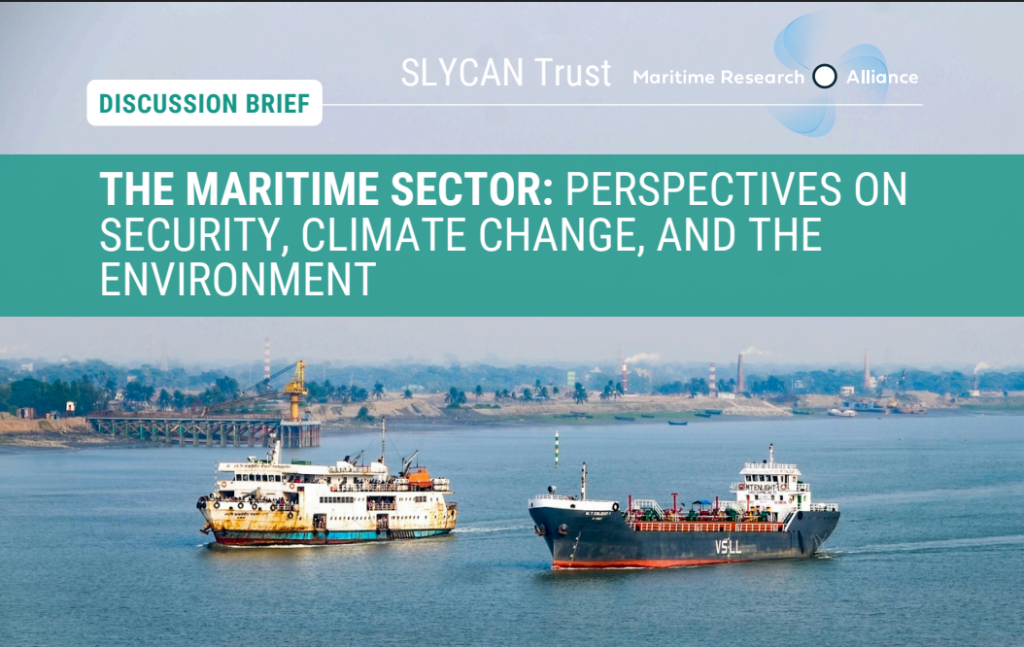
The brief builds on a workshop co-organized by SLYCAN Trust and the Maritime Research Alliance at Copenhagen Business School in September 2025. The workshop brought together stakeholders from governments, academia, think tanks, and industry to explore the interlinkages between biodiversity loss, climate change, decarbonization of shipping, and maritime security.
The discussion brief highlights how these crises are deeply interconnected — and how current governance structures remain fragmented and insufficiently coordinated. It points to critical gaps in global ocean governance, the risk of an unjust green transition in shipping, and the need to better integrate biodiversity protection, climate action, and security considerations under a more coherent framework.
A central message of the brief is that the global green transition presents a unique opportunity: maritime governance can move from being reactive and siloed to becoming integrated, collaborative, and forward-looking. Ports, regulators, industry actors, and researchers all have a key role to play in ensuring that decarbonization, biodiversity stewardship, and maritime security reinforce rather than undermine each other.
The brief concludes with a proposed research agenda, including:
– Operationalizing maritime security in the context of climate and biodiversity challenges
– Strengthening multi-level governance and capacity-building, particularly in developing countries
– Addressing enforcement gaps and shadow fleets
– Exploring the role of ports as implementation hubs for decarbonization and ecosystem protection
– Designing equitable and resilient frameworks for the maritime green transition
For MRA, contributing to this brief reflects our commitment to connecting research with pressing global policy debates and to fostering dialogue across disciplines and sectors. We are proud to have been part of this important collaboration and look forward to continuing the conversation on how to build a more secure, just, and sustainable maritime future.